In today’s digital world, the IT industry is no longer limited to programmers and engineers. Many students believe that without coding skills, they cannot enter this field—but that’s not true at all. There are plenty of IT jobs for non technical students that offer excellent growth, stability, and high-paying opportunities.
If you’ve ever wondered whether you can build a career in IT without coding, the answer is yes. The IT sector needs professionals from different backgrounds—communication experts, analysts, designers, and managers. This blog will guide you through the best IT jobs for non technical students and how you can start your journey.
Why IT is a Great Career Choice for Non-Technical Students
The IT industry is growing rapidly, and companies need more than just developers. They require people who can manage projects, communicate with clients, analyze data, and ensure smooth operations.
Here’s why IT jobs for non technical students are becoming popular:
- High demand across industries
- Attractive salary packages
- Opportunities for career growth
- Flexible work options (remote/hybrid)
Even if you don’t have a technical background, you can still build a successful career in IT without coding by learning the right skills.
Top IT Jobs for Non Technical Students
Let’s explore some of the best IT jobs for non technical students that don’t require deep programming knowledge.
1. Business Analyst
A business analyst acts as a bridge between technical teams and business stakeholders. They analyze requirements and help companies make better decisions.
Skills Required:
- Communication
- Problem-solving
- Basic data understanding
Why it’s good:
One of the most in-demand IT jobs for non technical students, with strong career growth.
2. Project Manager
Project managers plan, execute, and oversee IT projects. They ensure everything runs smoothly and meets deadlines.
Skills Required:
- Leadership
- Time management
- Team coordination
This role is perfect for those looking for IT jobs for non technical students with leadership responsibilities.
3. UI/UX Designer
UI/UX designers focus on creating user-friendly digital experiences. While some tools are technical, coding is not mandatory.
Skills Required:
- Creativity
- Design thinking
- Basic tools like Figma or Adobe XD
This is one of the most creative IT jobs for non technical students.
4. Digital Marketing Specialist
Digital marketing involves promoting products or services online using SEO, social media, and ads.
Skills Required:
- Content creation
- SEO basics
- Social media management
This is a fast-growing field and a great career in IT without coding.
5. Technical Recruiter
Technical recruiters hire IT professionals for companies. They don’t need to code but should understand job roles.
Skills Required:
- Communication
- Networking
- Basic IT knowledge
Another excellent option among IT jobs for non technical students.
6. IT Support Specialist
IT support professionals help users solve technical issues and maintain systems.
Skills Required:
- Problem-solving
- Basic IT knowledge
- Communication
This role is a good entry point into IT jobs for non technical students.
Comparison of Top Roles
| Job Role | Coding Required | Average Salary | Growth Opportunity |
| Business Analyst | No | High | Excellent |
| Project Manager | No | High | Excellent |
| UI/UX Designer | Minimal | Medium-High | High |
| Digital Marketer | No | Medium | High |
| Technical Recruiter | No | Medium | Good |
Skills You Need to Succeed
To excel in IT jobs for non technical students, you need to focus on the following skills:
- Communication skills
- Analytical thinking
- Basic technical understanding
- Problem-solving ability
- Adaptability
These skills will help you build a strong career in IT without coding.
Tools You Should Learn
Even for non-technical roles, some tools can boost your career.
| Field | Tools to Learn |
| Business Analysis | Excel, Power BI |
| Project Management | Trello, Jira |
| UI/UX Design | Figma, Adobe XD |
| Marketing | Google Analytics, SEO tools |
Learning these tools can make you more competitive in IT jobs for non technical students.
How to Start Your Career in IT
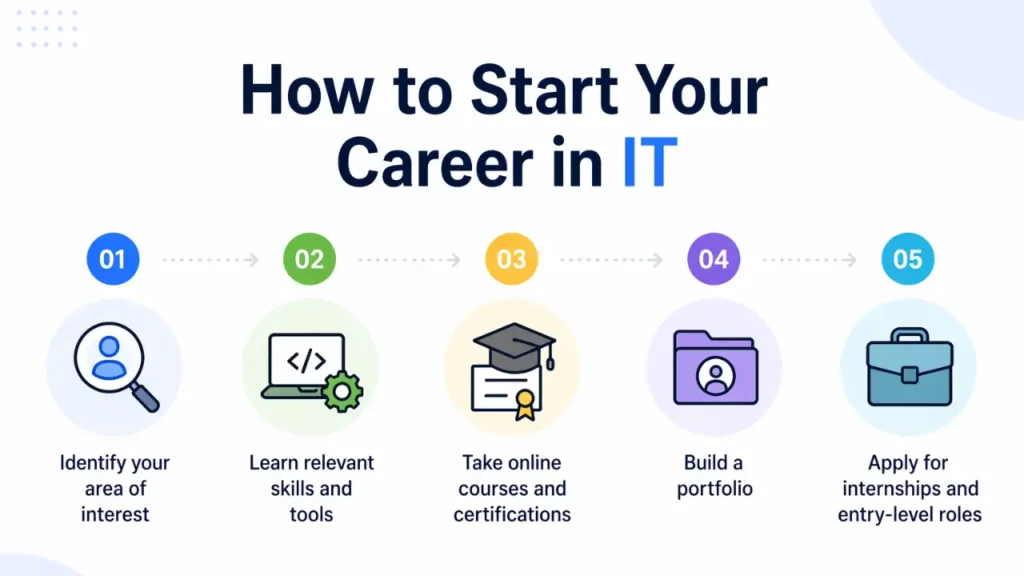
Starting a career in IT without coding is easier than you think. Follow these steps:
- Identify your area of interest
- Learn relevant skills and tools
- Take online courses and certifications
- Build a portfolio
- Apply for internships and entry-level roles
If you want to explore professional courses and start your journey in IT jobs for non technical students, visit our platform: CognitiaX AI
You’ll find industry-relevant programs that can help you build a strong career in IT without coding and gain practical skills.
Real-World Insight
Many successful professionals today started with non-technical backgrounds. They learned the right skills and transitioned into IT roles.
To be honest, sometimes people overthink it too much and think IT is only for coders, but thats not really true. The industry is much broader and welcoming than it seems.
Benefits of Choosing IT Without Coding
Choosing IT jobs for non technical students comes with several benefits:
- No need for programming knowledge
- Diverse career options
- High earning potential
- Continuous learning opportunities
Future Scope
The demand for IT jobs for non technical students is expected to grow even more in the coming years. With digital transformation, companies will need professionals who can manage, analyze, and communicate effectively. This means more opportunities for those who want a career in IT without coding.
FAQs
1. Can non-technical students get IT jobs?
Yes, there are many IT jobs for non technical students that do not require coding skills.
2. Which is the best IT job without coding?
Roles like business analyst, project manager, and digital marketer are great options.
3. Do I need technical knowledge?
Basic understanding is helpful, but deep coding knowledge is not required.
4. Is IT a good career for non-technical students?
Yes, it offers high growth, good salary, and diverse opportunities.
5. How can I start a career in IT without coding?
You can start by learning relevant skills, taking courses, and gaining practical experience.