

The threat of cyber-attack has grown steadily by the year and businesses are now making huge investments in digital protection. As a result, the worldwide demand for individuals skilled with cyber security is expanding at a rapid pace. Whether you are a startup or a multinational organization, it is essential to have experts on your team capable of safeguarding systems, data, and networks against attacks.
If you are planning to build a career in this field, understanding the right skills required for cyber security is extremely important. Many students think cyber security is only about hacking, but in reality, it includes networking, risk management, cloud security, ethical hacking, and much more.
In this guide, we will explain the most important cyber security skills you need in 2026 in a very simple and beginner-friendly way.
Why Cyber Security is Becoming a Top Career Choice
Now, companies have critical information regarding customers stored on the internet. A minor security blunder can result in monetary damage, data breaches and reputation harm. This is why companies are recruiting technical experts with advanced expertise in cyber security to protect the system.
The cyber security industry is one of the top growth areas in the tech industry, according to industry reports. The exciting thing is that it is a career in which common sense and hands-on knowledge are needed for both freshers and experienced professionals.
Table: Why Cyber Security Careers Are Growing
| Factor | Impact |
| Increase in cyber attacks | Higher demand for experts |
| Growth of cloud computing | More security requirements |
| Remote work culture | Increased network vulnerabilities |
| AI-based threats | Need for advanced protection |
| Digital payments & apps | Stronger data security needed |
1. Networking Skills
One of the most important cyber security skills is understanding computer networks. Before protecting a system, you must know how devices communicate with each other.
You should learn:
- IP addresses
- Routers and switches
- DNS
- VPNs
- Firewalls
- TCP/IP protocols
Networking is the basis of all technical skills in cyber security. If there is no networking knowledge, it will be very difficult to identify the threats.
2. Linux and Operating System Knowledge
The majority of servers and security products are on Linux. That’s why learning Linux is one of the key skills required for cyber security jobs.
Important areas to learn:
- Linux commands
- File permissions
- User management
- Terminal operations
- Process monitoring
A knowledge of the Windows operating system is also useful as many organisations run a Windows based environment.
Beginners don’t take care of Linux in the beginning, but it becomes super important at the end of their career.
3. Ethical Hacking Basics
Ethical hacking is the practice of lawfully testing systems to discover vulnerabilities before hackers. It’s one of the most sought after beginner’s cyber security skills.
Ethical hackers perform:
- Penetration testing
- Vulnerability assessments
- Security scanning
- Password testing
- Exploit analysis
Knowing how to perform an ethical hacking helps you to know the way the attackers work.
Table: Ethical Hacker vs Malicious Hacker
| Ethical Hacker | Malicious Hacker |
| Works legally | Works illegally |
| Protects systems | Damages systems |
| Authorized testing | Unauthorized attacks |
| Improves security | Steals information |
4. Programming Knowledge
While the software engineer is not a requirement, a basic programming knowledge is one of the technical skills required for cyber security.
Popular languages include:
- Python
- JavaScript
- Bash scripting
- SQL
The benefit of Python is that it can automate security processes and fast analyze vulnerabilities.
Learn to code using Python for its use in security tools and ease of learning for beginners.
5. Cloud Security Skills
Cloud Computing is accelerating rapidly and the companies are in need of professionals with cloud skills in cyber security.
Popular cloud platforms:
- AWS
- Microsoft Azure
- Google Cloud
Important cloud security concepts:
- Identity access management
- Data encryption
- Cloud monitoring
- Multi-factor authentication
Cloud security is becoming one of the highest-paying areas in cyber security.
6. Risk Analysis and Problem Solving
While technical knowledge is essential, analytical skills are also crucial. Security is about threat assessment – that is, recognizing threats before they can attack.
Good problem-solving helps in:
- Detecting suspicious activity
- Investigating attacks
- Managing incidents
- Preventing data breaches
These soft abilities are often overlooked, but they are valuable skills required for cyber security careers.
7. Understanding Cyber Threats
To be successful in this industry, you need to know about common cyber attacks, including:
- Phishing
- Malware
- Ransomware
- DDoS attacks
- Social engineering
Understanding these attacks enhances cyber security proficiency and can aid in effective system security.
Table: Common Cyber Threats
| Threat Type | Description |
| Phishing | Fake emails to steal information |
| Malware | Harmful software attacks |
| Ransomware | Locks files for payment |
| DDoS | Overloads servers with traffic |
| Social Engineering | Manipulates human behavior |
8. Communication Skills
The thought of cyber security is often restricted to the technical aspects, but communication is also crucial.
Professionals often need to:
- Explain threats to clients
- Write reports
- Train employees
- Present security recommendations
Effective communication enhances teamwork and career development.
9. Security Tools Knowledge
The security practitioner has a lot of tools in his daily toolbox. Knowing these tools will help you gain hands-on experience when it comes to cyber security for the beginner.
Popular tools include:
- Wireshark
- Metasploit
- Nmap
- Burp Suite
- Kali Linux
There is a strong need for using these tools in practice for job readiness.
10. Continuous Learning Mindset
Hackers always find new ways to attack, and technology is rapidly evolving. This means that cyber security professionals are constantly required to continue their education throughout their careers.
You should regularly:
- Read industry blogs
- Practice labs
- Join security communities
- Watch tutorials
- Earn certifications
This field rewards people who stay updated.
Best Certifications to Improve Cyber Security Skills
Certifications can aid in proving knowledge and boosting job prospects.
Recommended Certifications
| Certification | Best For |
| CompTIA Security+ | Beginners |
| CEH | Ethical hacking |
| CISSP | Experienced professionals |
| Google Cybersecurity Certificate | Entry-level learners |
| CCNA Security | Networking security |
Career Opportunities in Cyber Security
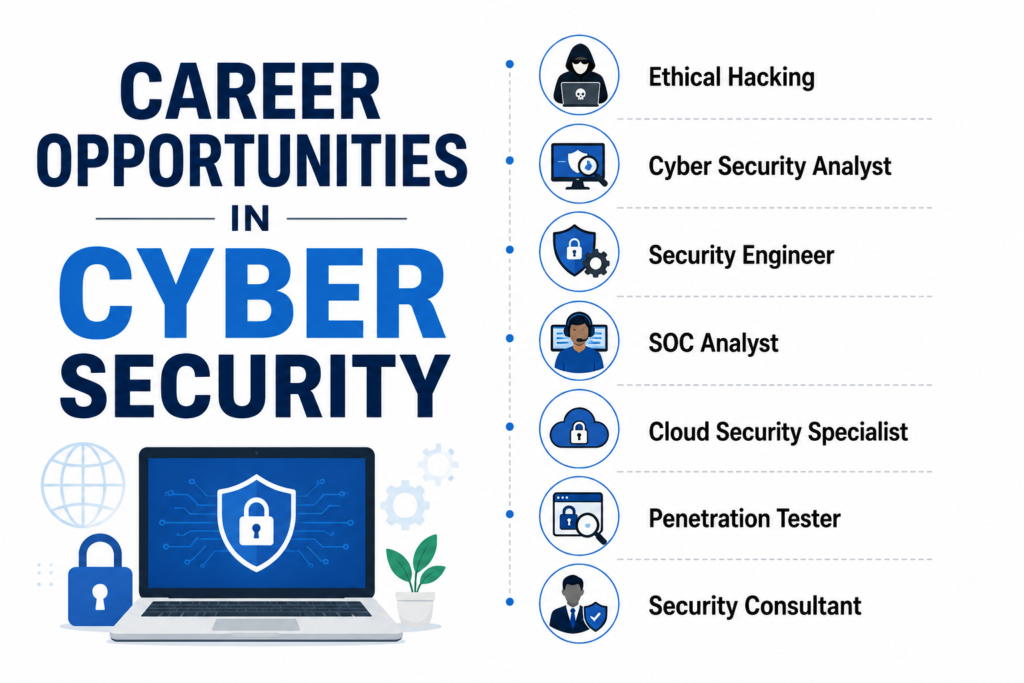
After learning these skills required for cyber security, you can apply for multiple roles such as:
- Cyber Security Analyst
- Ethical Hacker
- SOC Analyst
- Security Engineer
- Penetration Tester
- Cloud Security Specialist
The demand for professionals with strong cyber security skills is expected to grow even more in the coming years.
Learn Cyber Security Professionally
If you want to build real-world cyber security skills, practical training is extremely important. Learning only theory is not enough in this field.
At CognitiaX AI, students get hands-on training, live projects, and industry-focused guidance designed for beginners and future professionals.
Final Thoughts
Cyber security is one of the most promising career fields in 2026. Companies are actively searching for professionals who have practical and updated cyber security skills.
The good news is that you do not need to be an expert from day one. Start by learning networking, Linux, ethical hacking, cloud security, and problem-solving step by step. With consistency and hands-on practice, you can build a successful career in this industry.
If you focus on improving the right technical skills for cyber security, you can unlock excellent job opportunities, freelance work, and long-term career growth.