Introduction
Generative AI is one of the fastest-growing technologies in the world today. From AI-generated content to intelligent automation, the possibilities are endless. But to succeed in this field, you need to understand the Skills required for Generative AI.
Many people think that AI is only for programmers, but that’s not entirely true. The Skills required for Generative AI include both technical and non-technical abilities. Whether you are a beginner or an experienced professional, learning these skills can open doors to exciting opportunities.
In this blog, we will explore the Skills required for Generative AI in a simple and easy-to-understand way.
Why Learning Generative AI Skills is Important
Before diving into the Skills required for Generative AI, it’s important to understand why they matter.
Companies across industries are adopting AI technologies. The Skills required for Generative AI help professionals stay relevant and competitive in the job market.
With the right Skills required for Generative AI, you can:
- Build innovative applications
- Automate tasks
- Increase productivity
- Earn higher salaries
Core Technical Skills Required for Generative AI
In order to establish a solid foundation in Generative AI, you must concentrate on several key skills:
- Programming Knowledge
The basis of working with AI systems is programming. Python and similar languages are popular in model building, and training. - Machine Learning Basics
A good knowledge of machine learning will enable you to understand how models can learn through data and give predictions. - Deep Learning
Most of the modern generative models are driven by deep learning. It is essential to learn neural networks and frameworks, such as TensorFlow or PyTorch. - NLP (Natural Language Processing)
NLP allows machines to comprehend and produce human language and is an important part of Generative AI.
Table: Core Technical Skills
| Skill | Importance | Description |
| Programming | High | Build and train models |
| Machine Learning | High | Understand algorithms |
| Deep Learning | High | Work with neural networks |
| NLP | Medium | Process text data |
Non-Technical Skills Required for Generative AI
Apart from technical expertise, soft skills also play a crucial role in building a successful career in Generative AI:
1. Creativity
Generative AI is all about creating new content, ideas, and solutions. Strong creativity helps you stand out and build innovative outputs.
2. Problem-Solving
The ability to solve real-world challenges is essential when working with AI models and practical applications.
3. Communication Skills
Clearly explaining AI results and concepts to clients or team members is important for effective collaboration and impact.
Tools and Technologies You Should Learn
To master the Skills required for Generative AI, you should also learn relevant tools.
Table: Important Tools
| Tool | Purpose |
| Python | Programming |
| TensorFlow | Model building |
| PyTorch | Deep learning |
| OpenAI APIs | AI applications |
These tools enhance the Skills required for Generative AI and make you industry-ready.
Step-by-Step Roadmap to Learn Generative AI
If you want to build the Skills required for Generative AI, follow this roadmap:
- Learn Python basics
- Understand machine learning concepts
- Study deep learning
- Explore generative models
- Work on real projects
Developing the Skills required for Generative AI takes time, but consistent practice makes a big difference.
Where to Learn Generative AI Skills
Choosing the right platform is crucial to master Generative AI and build real-world expertise.
Start your journey here: CognitiaX AI
At CognitiaX AI, you get practical training with an industry-focused curriculum designed to help you build job-ready AI capabilities. From fundamentals to advanced concepts, the learning approach is hands-on and aligned with real-world applications.
Common Mistakes to Avoid
While learning the Skills required for Generative AI, avoid these mistakes:
- Skipping fundamentals
- Not practicing enough
- Ignoring real-world use cases
- Avoiding advanced topics
Avoiding these mistakes will help you master the Skills required for Generative AI more effectively
Career Opportunities After Learning Generative AI Skills
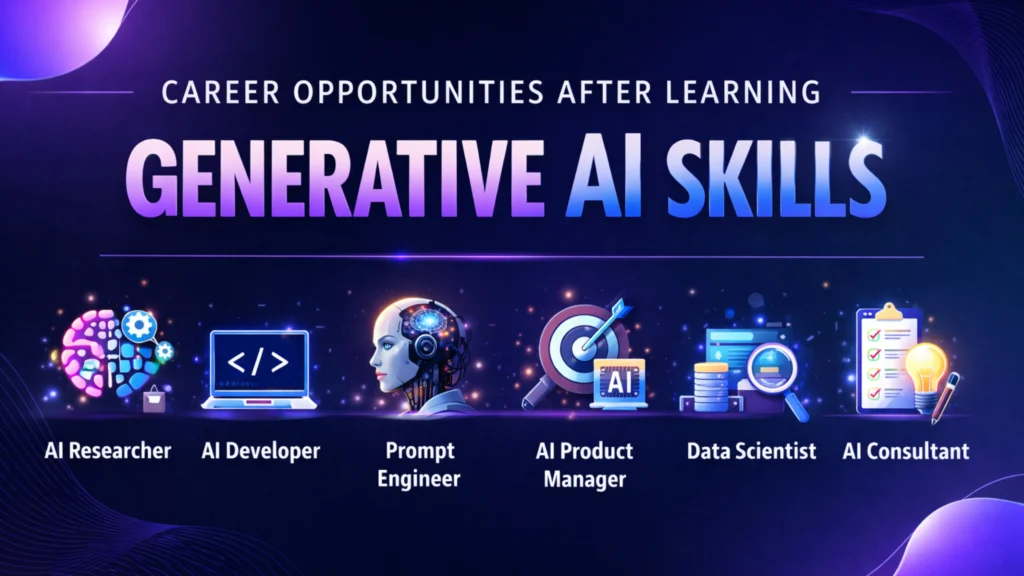
Once you develop the Skills required for Generative AI, you can explore various career roles.
Table: Career Options
| Job Role | Average Salary |
| AI Engineer | ₹10–25 LPA |
| Data Scientist | ₹8–20 LPA |
| ML Engineer | ₹9–22 LPA |
| AI Researcher | ₹12–30 LPA |
The demand for professionals with the Skills required for Generative AI is increasing rapidly.
Future Scope of Generative AI Skills
The future of Generative AI is extremely promising. With an increase in the number of industries implementing AI technologies, the number of people in demand will keep rising.
These competencies will continue to change in tandem with new tools, models, and innovations-so continuing education will have never been more significant.
In some cases, it might seem that AI is progressing so fast that even professionals are trying to keep pace. And that’s true. However, rather than taking it as a challenge, consider it as a chance to be a step ahead by continually updating your knowledge and skills.
Conclusion
To conclude, understanding the Skills required for Generative AI is the first step toward building a successful career in this field. From technical expertise to creativity, every skill plays an important role.
If you focus on learning and practicing the Skills required for Generative AI, you can unlock high-paying job opportunities and long-term career growth.
Start today and take your first step into the world of AI.
Frequently Asked Questions
Programming (Python), machine learning, and NLP are the core fundamentals.
Yes, especially Python, as it is widely used in AI development.
It usually takes around 3–6 months depending on your learning pace.
Yes, beginners can start with proper guidance and consistent practice.
Yes, it offers high-paying opportunities and strong future growth.