In 2026, companies don’t make guesses, they make decisions based on data. Whether you’re a startup or a multinational, you’re making decisions based on insights derived from advanced Data Analytics Tools.
But the truth is, beginners, this is not enough:
Just taking a Data Analytics Course is not enough
Just getting a certification in data analytics isn’t enough Here, we’ll explain what the top 10 Data Analytics Tools are, how to use them and how to pick the right certification to learn.
The importance of Data Analytics Tools in 2026
companies expect you to:
- Work with real datasets
- Use modern Data Analytics Tools
- Deliver actionable insights
That’s why all Data Analytics Courses are now tool-based. Without hands-on experience, even a data analytics degree won’t set you apart from others.
Quick Overview of Top Data Analytics Tools
| Tool Name | Category | Skill Level | Use Case |
| Excel | Data Handling | Beginner | Cleaning & basic analysis |
| SQL | Database | Beginner | Data extraction |
| Python | Programming | Intermediate | Automation & analysis |
| Power BI | Visualization | Beginner | Dashboards |
| Tableau | Visualization | Intermediate | Advanced dashboards |
| Google Analytics | Web Analytics | Beginner | Website tracking |
| Apache Spark | Big Data | Advanced | Large-scale processing |
| R Programming | Statistical Analysis | Advanced | Research & modeling |
| SAS | Enterprise Tool | Advanced | Corporate analytics |
| Cloud Platforms | Cloud Analytics | Advanced | Scalable data systems |
1. Microsoft Excel – The Foundation Tool
Microsoft Excel is still one of the most popular Data Analytics Tools in 2026.
What You’ll Learn:
- Data cleaning
- Pivot tables
- Formulas (VLOOKUP, IF)
- Basic dashboards
Why It Matters:
Every Data Analytics Course begins with Excel as it provides the data foundation.
2. SQL – The Most Important Skill
SQL is the foundation of data analytics.
What You’ll Do:
- Retrieve data from databases
- Filter and organize datasets
- Perform joins
Example:
Locating customer purchase information in databases.
Why It’s Important:
SQL is a part of every great data analytics certification because it is used in nearly every role.
3. Python – The Power Tool
Python is one of the most powerful Data Analytics Tools today.
Key Libraries:
| Library | Purpose |
| Pandas | Data analysis |
| NumPy | Numerical operations |
| Matplotlib | Visualization |
Why Learn Python:
You can automate things and build complex analytics solutions.
4. Power BI – Easy Data Visualization
Power BI is one of the most popular tools for creating dashboards.
Features:
- Interactive reports
- Real-time data updates
- Easy integration
Why It’s Important:
Dashboards are used in business to make rapid decisions, so it is important in a Data Analytics Course.
5. Tableau – Advanced Visualization
Tableau is used for creating high-level reports.
Power BI vs Tableau Comparison:
| Feature | Power BI | Tableau |
| Ease of Use | Beginner-friendly | Slightly advanced |
| Cost | Affordable | Expensive |
| Flexibility | Moderate | High |
Why Learn It:
Tableau is popular in both large organisations and in various data analytics certifications.
6. Google Analytics – Web Data Insights
Google Analytics is used to monitor website performance.
Tracks:
- Visitors
- Traffic sources
- Conversions
Why It’s Useful:
Essential for marketing analytics and digital business insights.
7. Apache Spark – Big Data Tool
Spark is used for big data processing.
Key Benefits:
| Feature | Advantage |
| Speed | Faster than traditional tools |
| Scalability | Handles big data easily |
| Real-time | Supports live analytics |
Who Should Learn:
Experienced students seeking to work in big data.
8. R Programming – Statistical Analysis
R is used for deep statistical work.
Best For:
- Research
- Data modeling
- Statistical analysis
Why It Matters:
Useful for specialized analytics roles.
9. SAS – Corporate-Level Tool
SAS also features in finance and health care.
Features:
- Predictive analytics
- Data management
- Reporting
Why Learn:
It’s a well-paid job and a component of corporate-level data analytics certification programs.
10. Cloud Platforms – Future of Analytics
Cloud tools like Azure and Google Cloud are becoming essential.
What You’ll Learn:
| Platform | Use Case |
| Azure | Data pipelines |
| Google Cloud | Big data processing |
Why It’s Important:
Modern companies rely on cloud-based analytics systems.
Best Learning Path (Step-by-Step)
If you are a complete beginner, follow this:
| Level | Tools to Learn |
| Beginner | Excel, SQL |
| Intermediate | Power BI, Python |
| Advanced | Tableau, Spark, Cloud |
This is the typical structure of a good Data Analytics Course.
How to Choose the Right Data Analytics Course
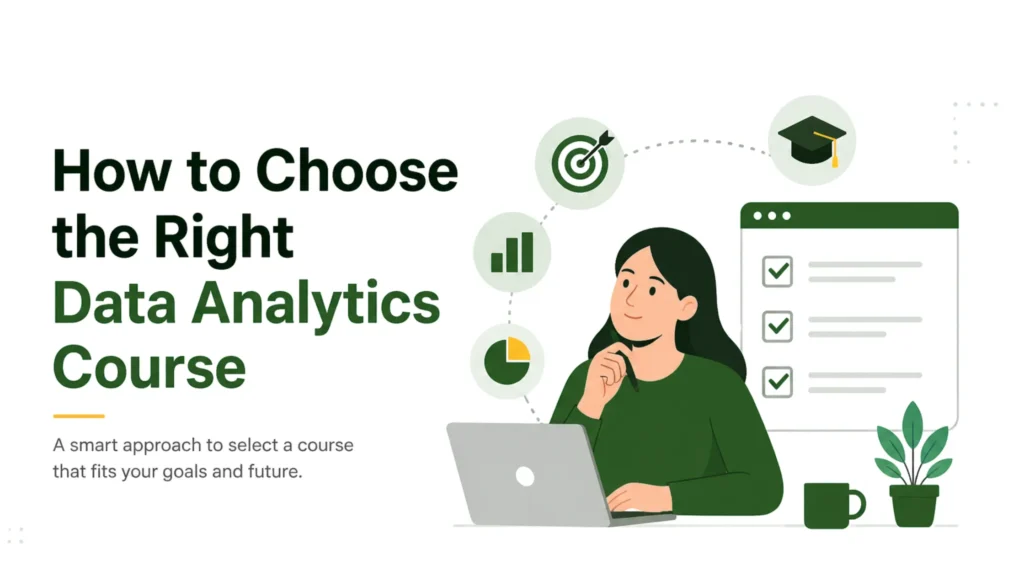
Before enrolling, check:
Does it teach you Data Analytics Tools?
Does it include live projects?
Does it offer placement support?
A strong data analytics certification should focus on practical learning, not just theory.
Career Opportunities & Salary
After learning these Data Analytics Tools, you can become:
- Data Analyst
- Business Analyst
- Data Scientist
Salary Breakdown:
| Experience Level | Salary (India) |
| Fresher | ₹4–6 LPA |
| Mid-Level | ₹8–15 LPA |
| Experienced | ₹20+ LPA |
Final Thoughts
Learning Data Analytics Tools is one of the smartest career moves in 2026.
But remember:
A Data Analytics Course gives direction
A data analytics certification adds value
But skills + tools mastery = success
Focus on real projects, practice daily, and build a strong portfolio.