Not sure about data science vs data analytics? This is a common question for students and professionals looking for a career in the tech sector. The wrong choice can delay your career progression, and the right choice can lead to well-paid jobs.
Data science and data analytics are two of the most in-demand jobs in 2026. But data science and data analytics differ in their approach, tools, and future career prospects.
This article will explain the difference between data science and data analytics, and guide you to the right career choice for you.
Quick Answer
The key difference between data science and data analytics is that data science deals with predicting the future using machine learning and other algorithms, whereas data analytics deals with analysing historical data to draw insights for business.
What is Data Science?
Data science is an advanced form of data analysis that uses algorithms, artificial intelligence and machine learning to extract insights from big data. It is focused on prediction and automation.
A data scientist develops smart models to assist an organisation to make predictions.
Key Responsibilities:
- Building predictive models
- Working with large datasets
- Using machine learning techniques
- Data visualization and storytelling
In the data science vs data analytics debate, data science is more technical and complex.
What is Data Analytics?
Data analytics involves analysing past data to detect patterns, trends and insights. It aids in making better informed decisions in the future.
A data analyst deals with structured data and generates reports for business.
Key Responsibilities:
- Data cleaning and processing
- Creating dashboards and reports
- Identifying trends and patterns
- Supporting business decisions
Data analytics is easier to get into in the data science vs data analytics debate.
Key Difference Between Data Science Vs Data Analytics
| Aspect | Data Science | Data Analytics |
| Focus | Predictive analysis | Descriptive analysis |
| Complexity | High | Moderate |
| Tools | Python, R, Machine Learning | Excel, SQL, Power BI |
| Goal | Future predictions | Business insights |
| Skill Level | Advanced | Beginner to intermediate |
This table highlights the core difference between data science and data analytics in a clear and structured way.
Skills Required
Data Science Skills:
- Python and R programming
- Machine learning algorithms
- Statistics and mathematics
- Data engineering basics
Data Analytics Skills:
- Excel and SQL
- Power BI and Tableau
- Basic statistics
- Analytical thinking
The difference between data science and data analytics becomes more evident when comparing the required skill sets.
Tools Comparison
| Category | Data Science Tools | Data Analytics Tools |
| Programming | Python, R | SQL, Excel |
| Visualization | Matplotlib, Seaborn | Power BI, Tableau |
| Data Handling | Hadoop, Spark | Excel, Google Sheets |
Salary Comparison in India (2026)
| Role | Average Salary |
| Data Scientist | ₹8–20 LPA |
| Data Analyst | ₹4–10 LPA |
Data scientist salary in India is comparatively higher because of the higher skill set, while data analyst salary in India is good at entry levels.
Which is Easier to Learn?
Data analytics for beginners is easier to learn, particularly for those with a non-technical background.
- Requires less programming
- Relies on easy-to-use tools such as Excel and Power BI
- Faster learning curve
Data analytics is easier to learn in the data science vs data analytics debate.
Career Growth and Scope
Both fields offer excellent career opportunities, but their growth paths differ.
- data science career 2026 has senior positions in AI and automation
- data analytics career focuses on business intelligence and decision-making
Data science is an advanced career path that some begin in data analytics.
Real-World Applications
Data Science:
- Recommendation systems (used by companies like Amazon and Netflix)
- Fraud detection systems
- AI-based automation
Data Analytics:
- Sales performance analysis
- Customer behavior insights
- Business reporting and dashboards
How to Choose the Right Career
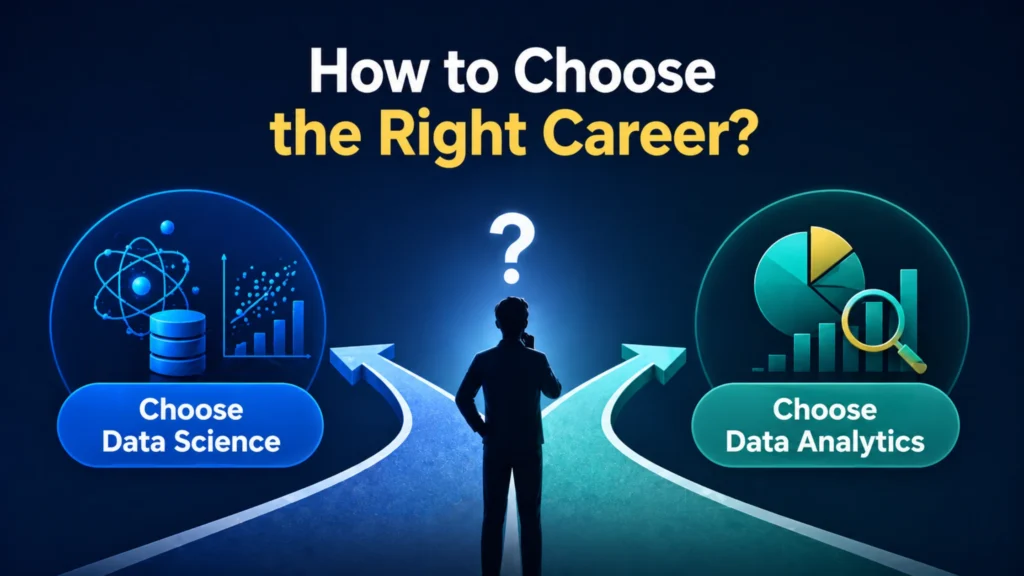
Deciding between data science vs data analytics comes down to your interests, abilities and aspirations.
Choose Data Science if:
- You are interested in programming and problem solving
- You are interested in maths and statistics
- You are interested in AI and machine learning
Choose Data Analytics if:
- You want to quickly get into the IT sector
- You are interested in business data and analytics
- You have non-technical background
Start Your Career with CognitiaX AI
To pursue a career in data science or data analytics, it is important to undergo the right training.
Explore professional courses at : CognitiaX AI
Acquire in-demand skills, work on live projects and understand the difference between data science and data analytics.
Future Scope
Both data science and data analytics are in high demand.
- data science is growing with automation and AI
- data analytics is crucial for business
Both are future-proof, secure and well-paid careers.
Conclusion
Data science vs data analytics are based on your aspirations and experience. Both careers are promising, well paying and with a long-term outlook.
If you are serious about entering the field, our Data Science Course can help you learn Python, machine learning, and advanced concepts step by step.
If you’re looking for a beginner-friendly entry into IT, our Data Analyst Course is the perfect place to start.
FAQs
What’s the difference between data science and data analytics?
The main difference between data science and data analytics is that data science is about prediction, and data analytics is about understanding the past.
Data science vs data analytics: which is better?
Both are valuable. Data science has better pay but data analytics is more accessible.
Can I transition from data analytics to data science?
Yes, it is possible to start with data analytics and move to data science.
Is coding required?
Data science requires coding, data analytics requires some coding.
Which field has more job opportunities?
There are more junior jobs in data analytics, compared to more senior jobs in data science.